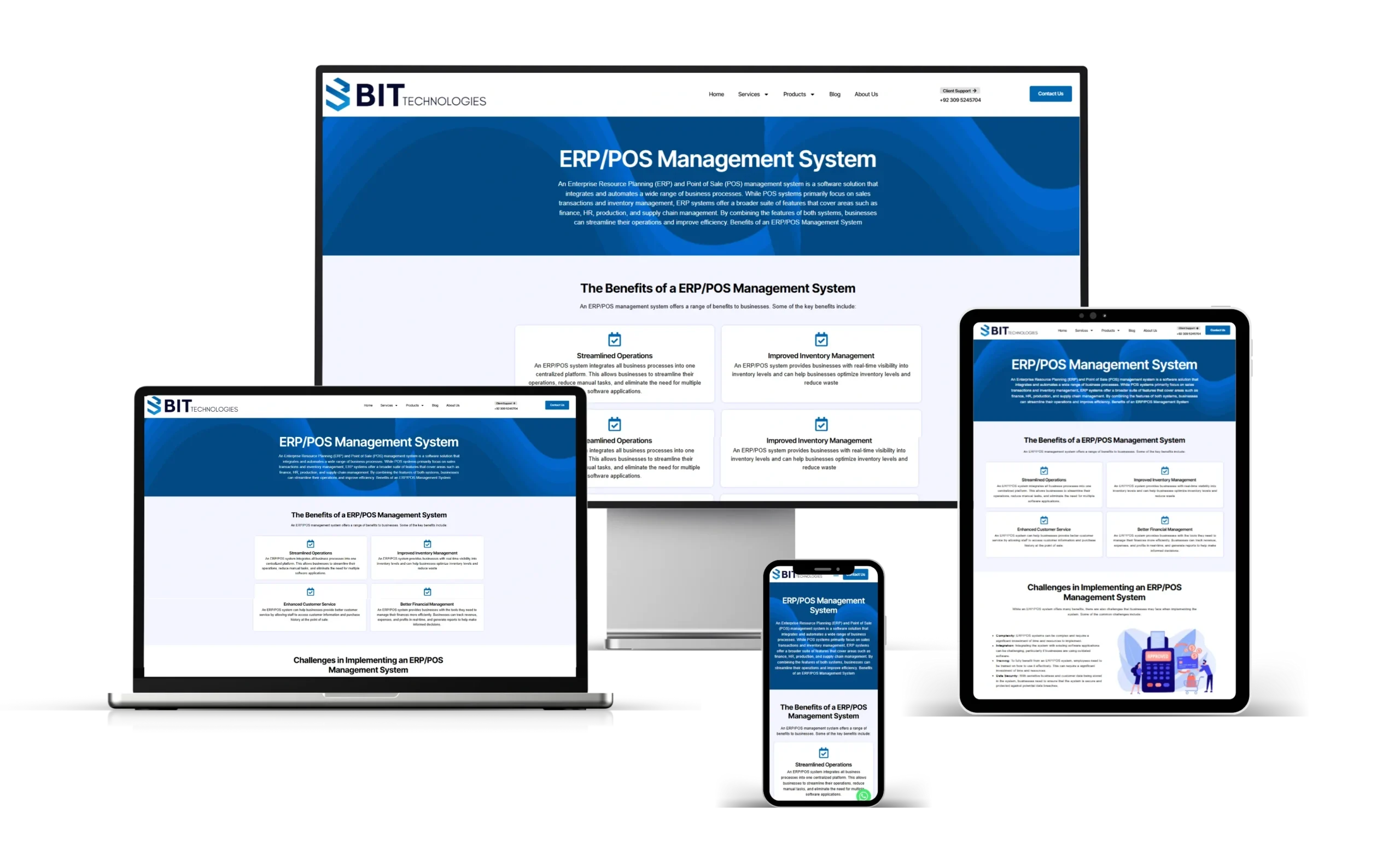
In Pakistan nowadays running a company means managing terms of sales, inventory, accounting, employees, and clients often using different tools that don’t really cooperate with one another. This is where ERP/POS management system comes into play. If you have already come across this term but are not very sure about what it actually means for your business, this article will explain everything in simple and concise words.
What Is ERP/POS Management System?
ERP or Enterprise Resource Planning (ERP) system refers to the software connecting and automating the backbone functions of the business — finance, human resources, inventory and supply chain in one single platform. On the contrary, the POS or Point of sale system focuses on sales only. This system manages billing customers, processing payment, and check-out process.When both systems are combined to create one single ERP/POS management system, the business achieves multiple benefits: rapid and reliable billing at the counter and complete control over all the processes happening behind the curtain, including stock and profits. Thanks to this combination, all retailers, restaurants, pharmacies, and wholesales can stop using multiple systems for accounting, sales and inventory. Everything is managed from one place.
Reasons for Incorporation of ERP/POS Systems by Pakistan’s Merchants
There is a rapid expansion in the country’s retail and SME sector along with rising competition. Businesses that still depend on traditional methods of bookkeeping, including manual registers, spreadsheets, or disconnected software, face the following difficulties:
– Inaccurate and outdated stock numbers
– Billing errors, which contribute to queues in the payment process
– Lack of control over outgoings and revenue
– Poor understanding of which items and members of the staff perform well
With the help of an integrated ERP/POS system, the problems mentioned above can be solved with the help of timely information and automation that every business needs.
Characteristics of a Good ERP/POS System
- POS System (Billing)
A good POS module allows staff to scan items, accept payments, and issue bills that decrease the duration of the queue and errors.
- Inventory Management
Real-time inventory tracking provides the owner with information about what is available, what is running low, and what products don’t sell properly.
- Financial Management
Thanks to the ERP system, the owner is able to keep the records up-to-date and generate reports automatically.
- CRM (Customer Relationship Management)
With the help of CRM
Reasons for Incorporation of ERP/POS Systems by Pakistan’s Merchants
There is a rapid expansion in the country’s retail and SME sector along with rising competition. Businesses that still depend on traditional methods of bookkeeping, including manual registers, spreadsheets, or disconnected software, face the following difficulties:
– Inaccurate and outdated stock numbers
– Billing errors, which contribute to queues in the payment process
– Lack of control over outgoings and revenue
– Poor understanding of which items and members of the staff perform well
With the help of an integrated ERP/POS system, the problems mentioned above can be solved with the help of timely information and automation that every business needs.
Characteristics of a Good ERP/POS System
- POS System (Billing)
A good POS module allows staff to scan items, accept payments, and issue bills that decrease the duration of the queue and errors.
- Inventory Management
Real-time inventory tracking provides the owner with information about what is available, what is running low, and what products don’t sell properly.
- Financial Management
Thanks to the ERP system, the owner is able to keep the records up-to-date and generate reports automatically.
- CRM (Customer Relationship Management)
With the help of CRM
Frequently Asked Questions
- What’s the difference between ERP and POS? POS software handles the sales counter — billing, payments, and receipts. ERP is broader, covering finance, inventory, HR, and supply chain across the whole business. An ERP/POS system combines both, so sales data automatically feeds into your inventory and financial records. 2.How long does it take to implement an ERP/POS system? It depends on business size and complexity, but most small to medium businesses can get core POS and inventory features running within a few weeks, with additional modules like HR and CRM rolled out gradually afterward.